

Waterproofing systems play a vital role in protecting structures from water penetration, moisture damage, and long-term deterioration. Among the various technologies used in modern construction, polyurethane waterproofing systems are widely recognized for their flexibility, durability, and strong adhesion to building surfaces.
Polyurethane-based membranes create highly elastic waterproof layers capable of accommodating structural movement and temperature changes. Because of these properties, polyurethane waterproofing is frequently used in areas exposed to environmental stress and dynamic structural conditions.
What Is Polyurethane Waterproofing?
Polyurethane waterproofing refers to liquid-applied membranes based on polyurethane resins that cure to form a seamless and flexible protective layer.
These membranes are applied in liquid form and harden after curing to create a continuous waterproof coating on the surface. The resulting membrane provides excellent resistance against water penetration while maintaining high elasticity.
Polyurethane waterproofing systems are commonly applied using:
- rollers
- brushes
- spray equipment
- squeegees
After curing, the material forms a durable waterproof barrier that adheres strongly to the substrate.
Key Characteristics of Polyurethane Waterproofing
Polyurethane membranes are widely used because of their unique performance characteristics.
High Flexibility
One of the main advantages of polyurethane waterproofing systems is their ability to accommodate structural movement and thermal expansion without cracking.
This flexibility makes them suitable for surfaces exposed to vibration or temperature changes.
Seamless Waterproof Layer
Unlike sheet membranes, polyurethane waterproofing systems create a continuous membrane without joints, reducing the risk of leaks.
This seamless structure is particularly beneficial in areas with complex surface geometries.
Strong Adhesion
Polyurethane coatings provide strong adhesion to various substrates including:
- concrete
- cement screeds
- metal surfaces
- existing waterproofing layers
Proper surface preparation ensures optimal adhesion and performance.
Durability
Polyurethane membranes are known for their long service life and resistance to environmental conditions.
Many formulations offer resistance against:
- UV exposure
- temperature changes
- weathering
- mechanical stress
Types of Polyurethane Waterproofing Systems
Polyurethane waterproofing products are generally available in two main types.
Single Component Polyurethane
Single-component polyurethane waterproofing systems are ready-to-use materials that cure through reaction with atmospheric moisture.
These systems are commonly used in:
- balconies
- terraces
- roofs
- exposed concrete surfaces
Two Component Polyurethane Systems
Two-component polyurethane waterproofing systems consist of a resin and hardener that react chemically during mixing.
These products are often used in applications requiring higher mechanical strength or faster curing.
They are frequently applied in:
- industrial floors
- parking decks
- heavy-duty waterproofing systems
Common Applications in Construction
Polyurethane waterproofing systems are widely used in both residential and commercial construction.
Typical application areas include:
- roofs and terraces
- balconies and podium decks
- parking garages
- bridges and infrastructure projects
- exposed concrete surfaces
- foundation structures
Because of their flexibility and durability, polyurethane membranes are particularly suitable for structures exposed to movement and environmental stress.
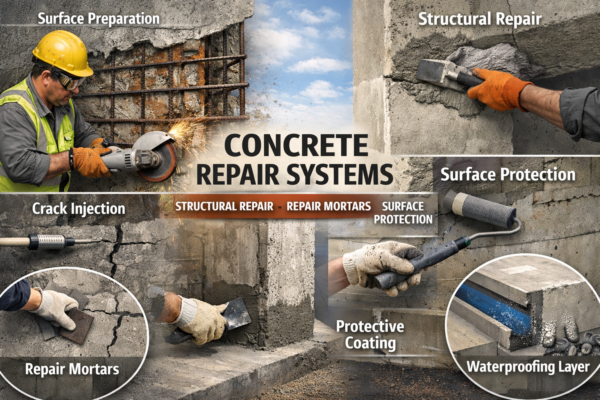
Surface Preparation and Application
Proper surface preparation is essential for achieving reliable waterproofing performance.
Before applying polyurethane waterproofing systems, surfaces should be:
- clean and dry
- free from dust and loose particles
- structurally sound
- properly primed if necessary
Correct application thickness and curing conditions are also important to ensure optimal membrane performance.
Conclusion
Polyurethane waterproofing systems have become an important solution in modern construction due to their flexibility, durability, and seamless waterproofing capability.
Their ability to adapt to structural movement and complex surfaces makes them particularly suitable for roofs, terraces, balconies, and other exposed building components. As waterproofing technologies continue to evolve, polyurethane membranes remain a reliable option for long-term structural protection.




Bir yanıt yazın