

The durability of a building is determined not only by the quality of its concrete but also by how effectively it is protected against water. When proper waterproofing is not applied at the foundation level, structures may eventually suffer from reinforcement corrosion, concrete deterioration, and moisture-related structural problems. For this reason, high-performance membrane systems are widely preferred in modern construction for foundation waterproofing.
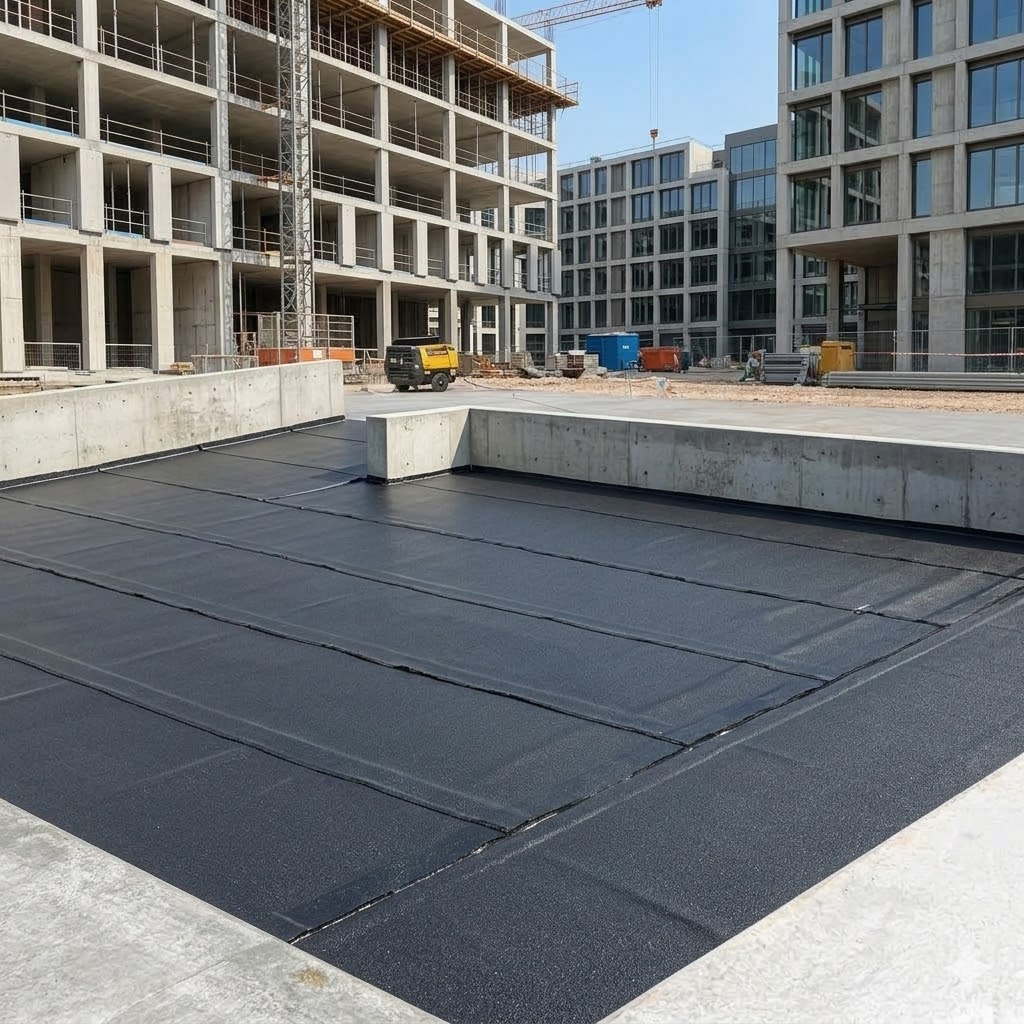
Proof membrane technology is one of the waterproofing systems developed specifically for foundation slabs and single-sided retaining wall waterproofing. These membranes are typically based on elastomeric bitumen formulations designed to provide strong adhesion to freshly poured concrete. During concrete casting, the hydration heat and pressure help the membrane bond tightly to the surface, creating an integrated waterproofing layer that becomes part of the structure itself.
This bonding mechanism prevents the formation of gaps between the waterproofing layer and the concrete. As a result, water cannot migrate between the membrane and the structure, significantly reducing the risk of water infiltration into the building.
Why Are Membranes Used in Foundation Waterproofing?
Groundwater and soil moisture present serious risks, especially in buildings with basement levels. Foundations that are not properly waterproofed may experience long-term exposure to moisture, which can weaken the structural integrity of the concrete over time.
Membrane systems act as a continuous waterproof barrier between the soil and the structural elements of the building. Bitumen-based proof membranes are flexible enough to accommodate structural movements while maintaining a watertight seal. Their durability and resistance to mechanical damage make them suitable for long-term underground protection.
Key Advantages of Proof Membranes
Full Adhesion to Concrete
Special surface structures allow the membrane to bond with the concrete, preventing water from traveling between the waterproofing layer and the structure.
High Flexibility
Elastomeric bitumen formulations maintain flexibility even at low temperatures, allowing the membrane to adapt to structural movements.
Single-Layer Application
Modern proof membrane systems can deliver high waterproofing performance with a single-layer installation, reducing labor time and application complexity.
High Puncture Resistance
Reinforcement layers such as polyester carriers improve resistance to punctures and mechanical impacts during construction.
Long-Term Waterproof Barrier
When properly installed, proof membranes create a durable waterproofing layer that protects foundations from groundwater and moisture throughout the life of the structure.
Areas of Application
Proof membrane systems are commonly used in:
- Foundation slab waterproofing
- Basement retaining walls
- Deep foundation structures
- Elevator pit waterproofing
- Underground parking structures
In these applications, the membrane forms a continuous waterproofing layer between the soil and the building structure, improving both structural durability and interior comfort.
Conclusion
Foundation waterproofing is one of the most critical elements in ensuring the longevity of a structure. Proof membrane technology provides a reliable solution with its strong adhesion to concrete and long-lasting performance. When applied correctly, foundation membranes protect buildings for many years against the damaging effects of groundwater and soil moisture.




Bir yanıt yazın